Payless Fence Company
Call (720) 697-2456

Wood fence installation Denver CO built for Colorado weather

Cedar and pressure-treated fences set deep, straight, and permitted


Wood fence installation Denver CO homeowners can count on starts with the right lumber and posts set below the frost line. We build cedar, pressure-treated pine, and privacy fences across Denver, check the permit picture for your address, and set every post in concrete so your fence stays plumb through freeze-thaw cycles.

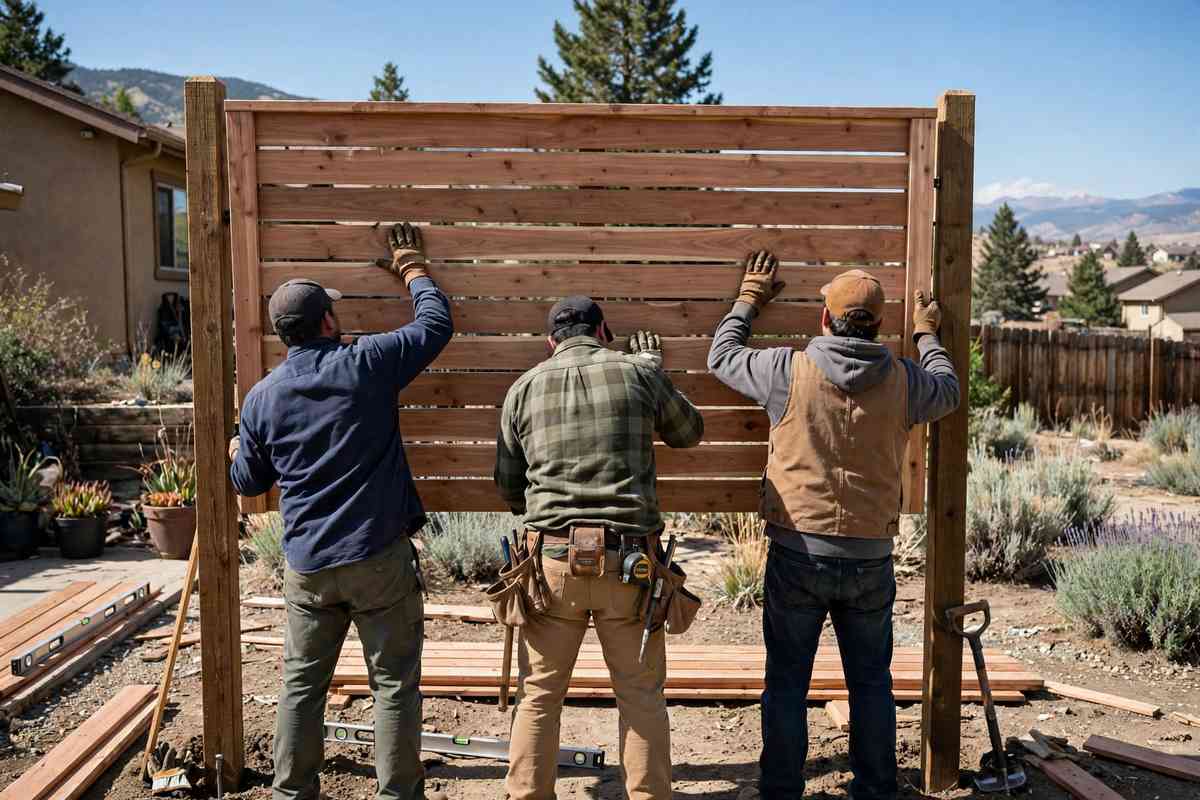
Fence crew lifting a cedar fence panel into place, Denver backyard, from behind
Denver Fence Contractor 17 Denver neighborhoods served
Open Daily Mon–Sun 7:00 AM–8:00 PM
Call to Book Call (720) 697-2456
Permit Guidance Zoning rules checked per job

What our wood fence installation includes

Every wood fence we build comes with the same core scope: layout, post setting, framing, pickets, gates, and cleanup. Here is what is covered, and what we will flag before we start if your lot needs something different.

Layout and utility locate

We mark the fence line with stakes and a string line, confirm property boundaries, and contact Colorado 811 for utility locates before any digging starts. This step prevents cut sprinkler lines, gas hits, and boundary disputes with neighbors.

Posts set in concrete

Posts go deep — frost depth in the Denver metro is commonly cited at about 36 inches — plumbed with a level and set in concrete. We let footings cure before hanging rails, because a fence that leans after one winter was almost always set too shallow.

Cedar or pressure-treated build

We build with kiln-dried cedar pickets on pressure-treated pine rails and posts. Cedar resists rot and insects naturally and takes stain well; pressure-treated pine costs less and is the workhorse for frames and posts.

Gates with proper bracing

Every gate gets a diagonal brace and heavy hinges. We hang it, test the swing, and adjust the latch before we leave. A gate that drags or sags is the number one complaint on cheap fence jobs, and we build to avoid it.

Permit and HOA guidance

We check the Denver rules for your address — 4 feet in front of the primary facade, 6 feet behind it, zoning permit over 4 feet — and help with HOA submittals where the association reviews first. You are not left to chase paperwork alone.

Demo, haul-away, and cleanup

Old fence, concrete footings, and scrap lumber all go in the trailer. We rake the work area, sweep the driveway, and walk the line with you before we leave.

Wood fence installation Denver CO: what the job actually involves


Wood fence installation Denver CO is the process of setting posts, hanging rails, and fastening pickets to create a boundary, privacy screen, or decorative run on your property. We start by walking the line with you, marking utilities, and pulling a string line so the fence sits straight. Posts go in deep with concrete footings, then cedar pickets or pressure-treated boards go up on rails, and every gate is cut to swing clean on its hinges.

Most Denver homeowners call us for one of three reasons: an old fence is leaning after a windstorm, a new puppy or child needs a safe yard, or an HOA notice landed in the mailbox. Denver's housing stock is old — the median year built is 1975 and more than half of homes predate 1980 — so plenty of fences are 15 or 20 years old and failing at the post line in bentonite clay.

How our wood fence installation process works

Every job follows the same four steps, whether it is a 40-foot side yard in Baker or a 300-foot perimeter in University Hills. You will know what happens each day.

01

Call

Call (720) 697-2456, Monday through Sunday, 7:00 AM to 8:00 PM, and we will talk through the wood fence, the yard, and the lot, and set a time to measure.

02

Measure & plan

We measure the line, check the ground and the slope, note trees and roots, and confirm the height and permit rules for your address before any hole is dug.

03

Build

Posts go in concrete and cure, rails and pickets go up straight and plumb, and gates are braced, hung, and tested. We keep the site tidy as we go.

04

Walk-through

We walk the wood fence with you when the build is done, check every gate and latch, and clear the site before we leave.

Tools and methods we use on every wood fence

Tools & Equipment

Post hole digger and auger

Used to bore clean 8- to 12-inch holes deep enough to clear the frost line. The auger handles the bulk of the digging and the hand digger cleans out the bottom and works tight corners where a machine will not fit.

String line and level

The string line keeps the fence straight over 100 feet, and the level keeps every post plumb. Skip either one and the fence looks wavy from the street. We check both at every post.

Circular saw and nail gun

The circular saw cuts pickets and rails to length, and the nail gun fastens them fast and consistent. We set the depth so nails sink flush without crushing the cedar grain.

Tamper and wheelbarrow

The tamper packs soil around each footing — that is what keeps a wood fence post from shifting — and the wheelbarrow moves concrete mix to the hole. Tamping is the step cheap crews skip, and it is why their posts lean by spring.

Fence pliers and wire tensioner

Fence pliers pull staples and twist wire on repairs, and the wire tensioner gets chain link runs tight so they do not sag. Both live on the truck for every job, wood or metal.

Gate brackets and heavy hinges

Used on gates, corners, and rail connections to add structural strength. A bracketed gate resists racking far better than nails alone. We use them on every gate we hang.

Methods & Standards

Posts set below Denver frost depth

Frost depth in the Denver metro is commonly cited at about 36 inches, and the exact code figure for fence posts is not settled in the sources we reviewed — so we treat 36 inches as the floor, never the target, and set posts in concrete with a flared base.

Screwed rails, not nailed

Rails take the wind load on a fence. We screw them, not nail them, so they hold through chinook gusts. Nails pull out over time; screws do not. It adds a little labor and a lot of life.

Corrosion-resistant fasteners

Galvanized or stainless hardware means no rust streaks down your cedar in three years. It is a small spec that makes a big visual difference on a light-colored fence.

Rot board at the base

A pressure-treated rot board sits between the pickets and the ground so the cedar never touches soil. The rot board takes the moisture and the pickets stay dry — important in clay that holds water against the post.

When Denver homeowners call us for a wood fence

01

New puppy or young kids and the yard has no fence at all

What we do:We measure the perimeter, talk through a 6-foot cedar privacy fence with a self-closing gate, check the permit rules for the address, and build it. We set the pickets tight so nothing squeezes through.

→ You get a safe, fully enclosed yard with a gate that latches every time.

02

Old fence is leaning, rotting, and past patching

What we do:We tear out the old line, break out the concrete footings, and build new on the same footprint. If some posts are still solid, we say so — a repair may be the better call, and our fence-repair page covers that decision.

→ A brand-new fence line that is plumb, tight, and built to the approved height, with the old mess gone.

03

Adding a driveway gate to a wood fence

What we do:We build a braced drive gate, hang it on heavy hinges, and set the posts deeper than the line posts, because a gate post carries the whole gate's weight every time it swings. Our gate-installation page covers manual gates in detail.

→ A gate that opens and closes without dragging, on posts that will not lean under the load.

04

Corner lot with a sight-triangle height restriction

What we do:We check the Denver sight-triangle rules for the intersection, step the fence down near the corner, and keep the taller privacy run along the side and back. The permit application reflects the stepped design.

→ You get privacy where you want it and stay within the rules where the city requires it.
How wood fence installation runs in Denver

Denver is hard on fences. The ground freezes deep in a cold snap, then thaws fast in March, and that cycle heaves shallow posts year after year. The soil is bentonite clay in much of the city, the sun sits a mile up, and hail season runs mid-April to mid-September. Wood handles all of that well when the posts are set deep and the boards are kept out of standing water — and poorly when either step is skipped.

Neighborhoods We Serve

  • Washington Park

    Brick homes from 1900 to 1940 around a 165-acre park. Park-facing fronts stay low and open; the solid 6-foot fence belongs at the rear. Local installers flag the heavy clay here and set posts deeper than the Denver norm. On these streets, a cedar or pine fence is the usual call.

  • Athmar Park

    Post-war brick ranches from the 1940s and 1950s, mostly with fenced back yards already. Heavy clay holds water against posts, and detached garages and alleys shape most rear fence lines. A cedar or pine fence is the usual call on these streets.

  • Berkeley

    Craftsman bungalows and Denver Squares from 1893 to 1939, with intense scrape-and-rebuild. New two-storey builds overlook original bungalow yards, which drives rear privacy work. These streets usually call for a cedar or pine fence.

  • Capitol Hill

    Denver's densest neighborhood, mostly apartments and converted mansions. The fence work here is usually courtyard, parking-area, and rear enclosures rather than a suburban backyard run. On these streets, a cedar or pine fence is the usual call.

  • University Hills

    Brick ranches from the 1950s to early 1970s on generous lots, with the High Line Canal running through the middle. Large corner lots are common, and I-25 bounds the east edge. A cedar or pine fence is the usual call on these streets.

Local Conditions We Plan For

  • Freeze-thaw cycles that heave shallow posts

    Denver's freeze-thaw ground lifts shallow posts within a winter or two. Frost depth is commonly cited at about 36 inches in the metro, and posts set shallower than that are the usual cause of a leaning fence. For a wood fence, that means posts set deep in concrete — shallow footings are the first thing we check.

  • Bentonite clay that holds water against posts

    Expansive bentonite clay swells when wet and shrinks when dry, and it drains slowly, so post bases stay wet. Pressure-treated posts and a rot board at the base keep pickets out of the wettest soil. On a wood fence job, the post bases get pressure-treated stock and a rot board to keep the wood out of the wet soil.

  • Denver permit and sight-triangle rules

    Denver caps fences at 4 feet in front of the primary street-facing facade and 6 feet behind it, and any fence over 4 feet needs a zoning permit. Corner lots have sight-triangle limits near intersections, and fences sit at least 6 inches back from the public sidewalk. A wood fence still follows the same height and setback rules — we check them for your address before quoting.

  • High-altitude UV that weathers wood and vinyl

    At 5,280 feet, Denver sun is stronger than at sea level. Unstained cedar turns silver-gray in a few years, and vinyl shows hail and UV wear first on the cheaper panels. For a wood fence, that means planning for sun and hail from the start — the material choice is the defense.

What a typical wood fence job looks like in Denver

Typical situation

A 20-year-old chain-link run is rusted, sagging, and leaning, and the yard has no privacy from the alley. The gate drags, and several posts have heaved out of the clay.

How it is handled

The old line and footings come out, new posts go in deep in concrete, and a 6-foot cedar privacy fence goes up with a braced walk gate. The fence is set at least 6 inches back from the public sidewalk and built to the approved height.

Upkeep:Re-stain every three to four years and keep sprinklers off the pickets. Check the gate hinges each spring and tighten as needed.

Typical situation

A gate drags on the concrete and a post has rotted at the base. The rest of the fence is sound, and a full replacement would waste good wood.

How it is handled

The rotted post is dug out, a new pressure-treated post goes in fresh concrete, two rails are replaced, and the gate is rehung with proper bracing. The repair is scoped to the failed parts, not the whole line.

Upkeep:Keep the gate hinges lubricated once a year and check the post base for soft wood each spring. A rot board at the base would prevent the same problem on the next post.

Typical situation

A 10-year-old cedar fence has gone silver-gray and is starting to splinter. The homeowner thinks it needs full replacement, but the posts and rails are still solid.

How it is handled

The fence is washed, a wood brightener is applied, and it is left to dry before stain goes on. This is general maintenance information, not a staining service — we do not offer fence staining as a standalone service, and the owner should confirm who does the staining before booking it.

Upkeep:Re-stain on a regular cycle to keep the color. Touch up any bare spots after a hail storm. Keep the fence clear of ivy and shrubs so airflow dries the wood.

Wood fence problems we fix for Denver homeowners

Most fence calls start with a problem, not a wish list. Here are the four we hear most often, and how we handle each one without selling you a full replacement when a repair will do.

Problem

Leaning fence posts after a freeze-thaw winter

A post set shallow in Denver's bentonite clay heaves with the first freeze-thaw cycle and pulls the rails and pickets out of line. We set every wood post below the frost line in concrete, so the section stays plumb instead of racking toward the neighbor's yard or the alley.

Our Fix

Every new post goes deep in fresh concrete below the frost line, and the rails and pickets are hung level off the set posts. The whole run is new lumber, set straight from the first post, so there is no old footing to work around.

Problem

Graying, splintering cedar that has not been stained

Unprotected cedar dries out, turns silver-gray, and starts checking and splintering within five to seven years. Once the grain opens up, boards soak water and rot from the inside.

Our Fix

We check whether the posts and rails are still sound. If they are, the fix is maintenance — washing and staining — which we describe in the maintenance notes on this page; staining itself is not a service we offer, so we will say so plainly and point you to the right trade.

Problem

Sagging gates that drag on the ground

A gate that drags on day one means the frame was built without a diagonal brace, or the hinges were set into a shallow post. We build wood gates with a braced frame and hinges anchored into posts set deep in concrete, then test the swing before we leave, so the gate still clears the ground after its first freeze-thaw winter.

Our Fix

We check the cause before we build. If the old gate sagged, the new frame gets a diagonal brace; if a post rotted at the ground line, the new post is pressure-treated and set in concrete. The fix is built into the new fence, and we test every gate's swing before we leave.

Problem

HOA violation notice about fence height or style

HOA notices come with deadlines. Most violations are about height, material, or color, and they are fixable without tearing the whole fence down.

Our Fix

We review your HOA rules, measure the fence, and either adjust the height, swap the material, or repaint to match. We also help with the submittal paperwork so the board gets what it needs.

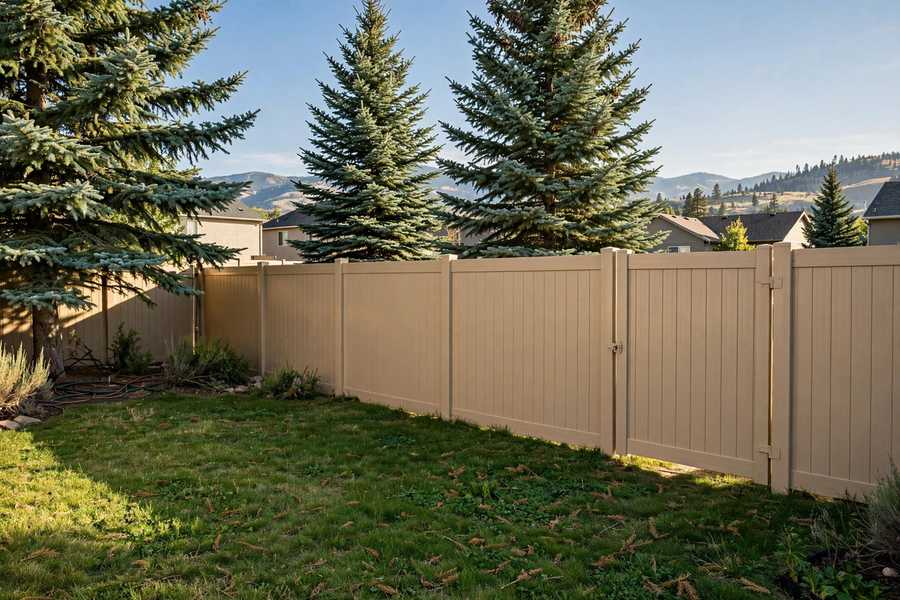
Tan vinyl privacy fence with matching gate, Denver backyard

Why Denver homeowners choose wood fencing

Wood is still the most popular fence material in Denver for good reason: it looks warm, it blocks sightlines, and it can be repaired board by board instead of replaced whole. Here is what you actually get when we build yours.

  • Real privacy, real fast

    A 6-foot cedar privacy fence blocks sightlines from the alley, the neighbor's second story, and the street. We set pickets tight with no gaps so you get full coverage, and we can add a top cap rail to keep the boards from cupping.

  • Cedar handles Colorado swings

    Cedar naturally resists rot and insects, and it holds stain well through dry summers and hard freezes. We use kiln-dried cedar pickets so boards do not twist after install.

  • Repairable, not disposable

    When a windstorm snaps three pickets or a car backs into a gate, you do not replace the whole fence. We pull the damaged boards, reset the rail, and match the new cedar to the old.

  • What wood fencing costs in the Denver market

    Third-party market guides published in October and November 2026 put cedar privacy fencing at $23 to $56 per linear foot installed in Denver, with pressure-treated pine lower. Sources: NumeralQ, 26 Oct 2026; Angi, updated 4 Aug 2026, average about $22 per foot across materials. Those are market ranges, not Payless Fence Company prices. Call (720) 697-2456 with your fence length and material and we will talk through a quote for your yard.

Denver fence rules to know before you build

Denver Fence Rules to Know

  • 4 feet in front, 6 feet behind — Denver caps a wood fence at 4 feet in front of the primary street-facing facade and 6 feet behind it; a front yard privacy wall is not an option.
  • Zoning permit over 4 feet — Denver requires a zoning permit for any fence over 4 feet tall; over-height requests go through the Zoning Code's over-height process — a 6-foot wood privacy run at the rear is the usual case.
  • Colorado 811 before digging — We contact Colorado 811 for utility locates before any post hole is dug; never dig blind in a Denver yard — a wood fence means a lot of holes.
  • HOA first, city second — In HOA neighborhoods, the association approves the fence before the city permit is filed; neither approval substitutes for the other — and many HOAs specify wood.

Rated on Google

Google ★★★★★4.9 out of 5

Rated 4.9 out of 5 from 27 Google reviews. Read the reviews on our Google Business Profile, or call (720) 697-2456 to talk about your fence.

Local experience with wood fences in Denver

Denver's clay-heavy yards, freeze-thaw winters, and hail seasons punish shallow footings and thin boards. We build wood fences for those conditions: deep concrete footings, pressure-treated frames, kiln-dried cedar pickets, and gates that are braced for the weight they carry. If your fence needs to pass an HOA review or a city inspection, we build it to the spec the first time.

  • Posts set deep for Denver's bentonite clay and freeze-thaw ground
  • Cedar and pressure-treated builds matched to the house and the block
  • Permit and HOA paperwork handled with the job
  • Gates braced and hung to swing clean
  • Old fence, footings, and scrap hauled away
Call (720) 697-2456
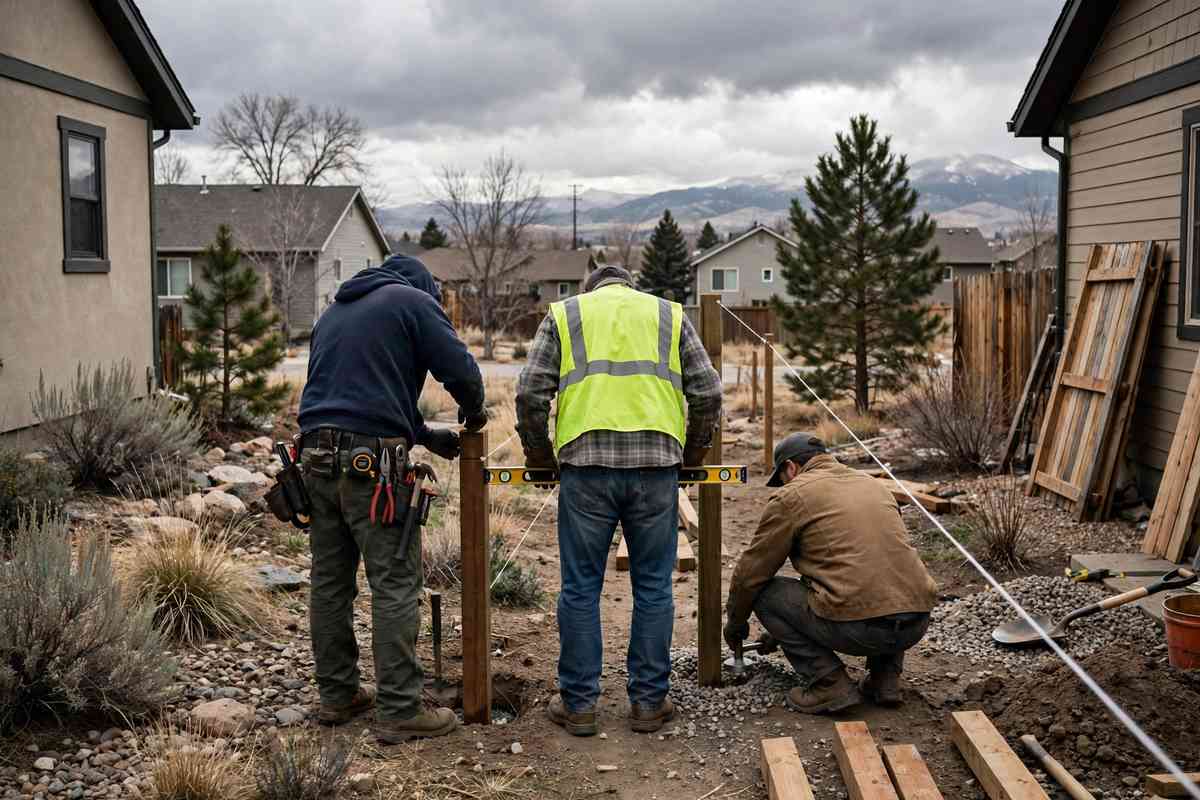
Fence crew setting posts along a string line, Denver side yard, from behind

Rated 4.9 out of 5 on Google

Payless Fence Company is rated 4.9 out of 5 from 27 Google reviews. That aggregate covers our Denver fence work, wood fences included. Call (720) 697-2456 to talk about your wood fence.

★★★★★

4.9 out of 5

Based on 27 Google reviews for Payless Fence Company. We do not publish customer quotes on this page; read the reviews on Google, then call us to talk about your fence.

Call (720) 697-2456

Frequently asked questions about wood fence installation in Denver

The questions we hear most often about wood fence, answered for local homeowners and property managers.

How much does wood fence installation cost in Denver?
Third-party market guides published in October and November 2026 put cedar privacy fencing at $23 to $56 per linear foot installed in Denver, with pressure-treated pine lower. Sources: NumeralQ, 26 Oct 2026; Angi, updated 4 Aug 2026, average about $22 per foot across materials. Those are market ranges, not Payless Fence Company prices. Call (720) 697-2456 with your fence length and material and we will talk through a quote for your yard.
What is the best wood for fences in Denver CO?
Cedar is the best all-around choice for Denver. It resists rot and insects naturally, handles dry summers and hard freezes, and takes stain well. Pressure-treated pine costs less and is the standard for posts and rails. We use kiln-dried cedar pickets because they stay straight and do not twist after install.
How long does wood fence installation take in Denver?
A standard 100- to 150-foot backyard run usually takes two to four days on site once the permit and utility locate are in hand. Before the build starts, the permit and locate add time, and larger perimeters, gates, and sloped or rocky yards add more. A cedar run cures and stains on its own schedule after the build. Call (720) 697-2456 to talk through timing for your lot.
Do I need a permit for a wood fence in Denver?
Denver requires a zoning permit for any fence over 4 feet tall, and a permit at any height on a landmark property, in a historic district, or along a designated parkway. Fences at 4 feet and under generally need no permit; a like-for-like replacement of a fence that already had a permit is generally exempt when nothing changes in location, footprint, or height. A 6-foot wood privacy run at the rear is the usual trigger. Before you build, check your address — historic-district and parkway rules are block-specific — and call (720) 697-2456 and we can walk through what your lot needs.

Call Payless Fence Company about a wood fence in Denver

Call Payless Fence Company at (720) 697-2456 to talk about a wood fence for your yard. We will go over the fence, the lot, and the permit picture for your address, and set a time to measure.

Call Now Call (720) 697-2456

Talk to our fence crew

Call (720) 697-2456 to talk about a wood fence. We answer Monday through Sunday, 7:00 AM to 8:00 PM. Have your approximate fence length, the material you are considering, and your neighborhood ready, and we can talk through the next steps on the call.

Payless Fence Company


  • Address

    Payless Fence Company LLC, Denver, CO 80201, US

  • Hours

    Mon–Sun 7:00 AM–8:00 PM

Call (720) 697-2456 Call Now
Call Call