Payless Fence Company
Call (720) 697-2456

Automatic gate opener installation Denver CO, swing and slide

Swing and slide openers with remotes, keypads, and safety sensors


Automatic gate opener installation Denver CO covers the opener, not the gate itself: the motor, the remotes, the keypad, and the safety sensors that open a driveway gate and close it behind you. This page is separate from manual gates on purpose — an opener is electrical work on a moving gate, and the safety picture is different. The gate has to be built for an opener before the opener goes on it.

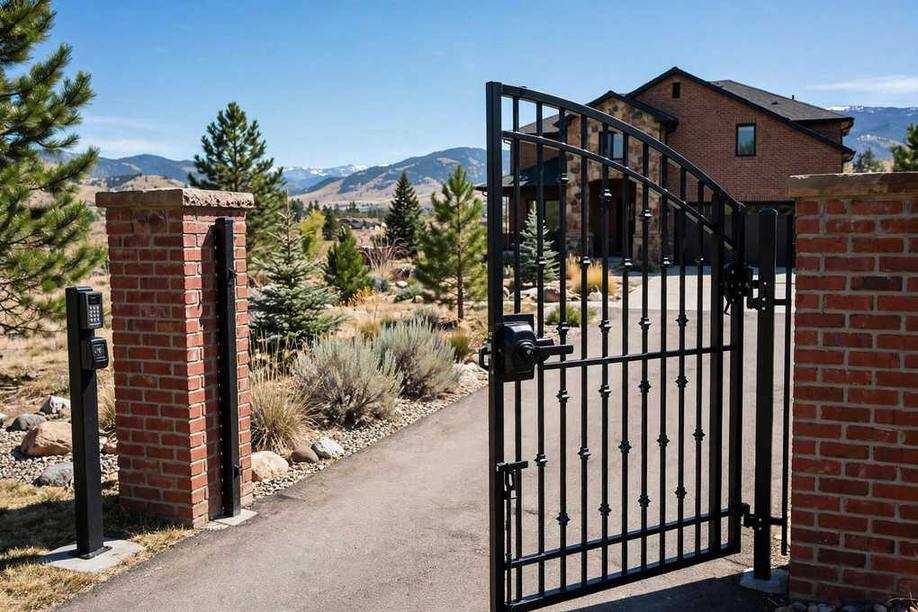
Automatic black metal driveway gate with brick pillars, Denver home
Denver Fence Contractor 17 Denver neighborhoods served
Open Daily Mon–Sun 7:00 AM–8:00 PM
Call to Book Call (720) 697-2456
Permit Guidance Zoning rules checked per job

What our automatic gate opener installation includes

Every automatic gate opener we install comes with the same core scope: the gate checked for an opener, the motor, the controls, the safety sensors, and testing. Here is what is covered, and what we will flag before we start if your gate or lot needs something different.

Gate checked for an opener first

An opener will not fix a gate that drags or a post that leans — it will break the opener. We check the gate's swing, the posts, and the hinges before any motor goes on, and we say plainly if the gate has to be rebuilt first.

Swing or slide opener, chosen for the lot

A swing opener needs clear space for the gate to open; a slide opener needs a clear run beside the drive. We measure the lot and talk through which fits, because the wrong type is the most common opener mistake.

Remotes, keypad, and access

Remotes for the cars, a keypad at the post, and a way in for visitors. We set up the controls, test every remote, and walk you through the keypad before we leave.

Safety sensors and auto-reverse

Safety sensors watch the gate's path, and the opener reverses if it meets an obstruction. A moving gate without working sensors is a hazard, and we do not install one that way.

Permit and HOA guidance

We check the Denver rules for your address — 4 feet in front of the primary facade, 6 feet behind it, zoning permit over 4 feet — and help with HOA submittals. Colorado has no statewide fence licence, and electrical work on an opener needs the relevant trade licence where the law requires it.

Testing and walk-through

We run the gate through its full cycle — open, close, stop, reverse — test every remote and the keypad, and walk you through the controls before we leave.

Automatic gate opener installation Denver CO: what the job actually involves


Automatic gate opener installation Denver CO is the process of fitting a motor to a driveway gate that is already built to take one, wiring the controls, and setting up the safety sensors. The gate has to swing or slide freely by hand first — an opener is not a fix for a dragging gate. The motor is then mounted, the remotes and keypad are programmed, the sensors are aligned, and the full cycle is tested: open, close, stop, and reverse on obstruction.

Most Denver homeowners want an opener for one reason: not getting out of the car in the rain, the snow, or the dark to open a driveway gate. The choice that matters is swing against slide. A swing opener is simpler and cheaper, but it needs the full arc of the gate clear. A slide opener needs a straight run beside the drive for the gate to slide into, and it handles a sloped drive better, because a swing gate fights gravity on a slope.

How our automatic gate opener installation process works

Every job follows the same four steps, whether it is a single swing gate in Congress Park or a double slide gate in University Hills. You will know what happens each day.

01

Call

Call (720) 697-2456, Monday through Sunday, 7:00 AM to 8:00 PM. We will talk through the gate opener installation, the yard, and the lot, and set a time to measure.

02

Check & plan

We check the gate's swing and posts, measure the drive and the clearances, and confirm the swing-or-slide choice, the power picture, and the permit rules for your address.

03

Install

The motor is mounted, the controls are wired, the sensors are aligned, and the gate is run through its full cycle. We keep the site tidy as we go.

04

Walk-through

Before we leave, we walk the finished gate opener with you, check every gate and latch, and clear the site.

Tools and methods we use on every automatic gate opener

Tools & Equipment

Post hole digger and auger

Used where a gate post has to be reset deeper before an opener goes on. An opener will not fix a leaning post — the post has to be right first.

String line and level

The string line keeps the gate posts in line with the fence, and the level keeps them plumb. An opener on a post out of plumb strains the motor on every cycle.

Multimeter and wiring tools

Used to check the power supply and wire the motor, the keypad, and the sensors. Electrical work on an opener needs the relevant trade licence where the law requires it.

Level and square for gates

The gate is checked square before the opener goes on. A gate built out of square drags, and a dragging gate burns out a motor.

Sensor alignment tools

Safety sensors have to be aligned to watch the gate's path. A misaligned sensor is a sensor that does not see the obstruction.

Remote programmer and keypad

Used to program the remotes and the keypad, and to set the open and close limits so the gate stops where it should.

Methods & Standards

Gate first, opener second

The gate has to swing or slide freely by hand before any motor goes on. An opener fitted to a dragging gate will strain the motor and fail early — so the gate is fixed or rebuilt first.

Swing or slide, chosen for the lot

A swing opener needs the gate's full arc clear; a slide opener needs a straight run beside the drive. We measure the lot and choose the type that fits, rather than forcing one type onto every drive.

Safety sensors on every install

Safety sensors watch the gate's path, and the opener reverses if it meets an obstruction. A moving gate without working sensors is a hazard, and we do not install one that way.

Power planned before the motor

An opener needs power at the gate, and the power picture — where it comes from, how it is protected, and what happens in an outage — is planned before the motor is ordered, not after.

When Denver homeowners call us for an automatic gate opener

01

A driveway gate has to be opened by hand in the rain and snow

What we do:We check the gate's swing and posts, talk through a swing or slide opener with remotes and a keypad, and install it. The gate is tested through its full cycle before we leave.

→ A driveway that opens from the car, and closes behind you, in any weather.

02

A sloped driveway makes a swing gate fight gravity

What we do:We measure the slope and talk through a slide opener, which handles a sloped drive better than a swing gate. The slide run beside the drive is measured and cleared before the opener is ordered.

→ A gate that opens and closes on a slope without fighting gravity on every cycle.

03

A property needs controlled access, not just a gate

What we do:We talk through remotes for the household, a keypad for visitors, and a way in for deliveries. The opener is set up with the access picture the property actually needs, not a generic one.

→ A gate that lets the right people in and keeps the rest out, without a guard at the post.

04

An old opener has failed and the gate is stuck

What we do:We check the gate first — a failed opener is often a gate that has started to drag — then the motor, the sensors, and the controls. The failed part is replaced, and the gate is tested through its full cycle.

→ A gate that works again, with the cause of the failure fixed, not just the symptom.

How automatic gate opener installation runs in Denver

Denver's opener jobs are driven by weather and by slope. Nobody wants to get out of the car in a January snowstorm to open a driveway gate, and plenty of Denver drives slope enough that a swing gate fights gravity on every cycle. The safety picture matters more than the convenience: a moving gate is heavy, it has to reverse on obstruction, and its sensors have to work. Colorado has no statewide fence licence, and electrical work on an opener needs the relevant trade licence where the law requires it — we say so plainly rather than implying the fence crew does it all.

Neighborhoods We Serve

  • Cherry Creek

    Cherry Creek North is the residential pocket behind the shopping district: early-1900s Craftsman and bungalow streets with small lots of 5,000 to 10,000 square feet and heavy scrape-and-rebuild. On these streets, an automatic gate opener is the usual call.

  • Central Park

    Master-planned community on the former Stapleton airport, built mostly 2002 to 2019. The Master Community Association and sub-associations review fence designs before the city permit — two approvals, in that order. An automatic gate opener is the usual call on these streets.

  • University Hills

    Brick ranches from the 1950s to early 1970s on generous lots, with the High Line Canal running through the middle. Large corner lots are common, and I-25 bounds the east edge. These streets usually call for an automatic gate opener.

  • Washington Park

    Brick homes from 1900 to 1940 around a 165-acre park. Park-facing fronts stay low and open; the solid 6-foot fence belongs at the rear. Local installers flag the heavy clay here and set posts deeper than the Denver norm. On these streets, an automatic gate opener is the usual call.

  • Highland

    Settled on high ground west of the South Platte and annexed by Denver in 1896 (some histories say 1890). The Potter Highlands Historic District covers about 276 acres and 571 contributing buildings — check per address before planning a fence. An automatic gate opener is the usual call on these streets.

Local Conditions We Plan For

  • Freeze-thaw cycles that heave shallow posts

    Denver's freeze-thaw ground lifts shallow posts within a winter or two. Frost depth is commonly cited at about 36 inches in the metro, and posts set shallower than that are the usual cause of a leaning fence. For a gate opener installation, that means posts set deep in concrete — shallow footings are the first thing we check.

  • Sloped and stepped lots

    Most central Denver lots are flat, but hillside and split-level lots need stepped or racked panels and deeper footings on the grade change. On a gate opener installation job on a hillside lot, stepped or racked panels and deeper footings handle the grade change.

  • Chinook wind that loads solid fences

    Chinook gusts on the Front Range can top 80 mph on the I-25 corridor. A solid 6-foot privacy run catches the full wind load, which is why posts, footings, and rail fastening matter more than the pickets. A gate opener installation has to be planned for Chinook gusts — posts, footings, and fastening carry the load.

  • Denver permit and sight-triangle rules

    Denver caps fences at 4 feet in front of the primary street-facing facade and 6 feet behind it, and any fence over 4 feet needs a zoning permit. Corner lots have sight-triangle limits near intersections, and fences sit at least 6 inches back from the public sidewalk. For a gate opener installation, we check the height and the sight triangle for your address before we quote.

What a typical automatic gate opener job looks like in Denver

Typical situation

A driveway gate has to be opened by hand, and the homeowner is tired of getting out of the car in the snow. The gate swings freely by hand, and the drive is flat with a clear arc.

How it is handled

A swing opener goes on the gate, with remotes for the cars and a keypad at the post. The safety sensors are aligned, and the gate is run through its full cycle — open, close, stop, and reverse on obstruction — before we leave.

Upkeep:Test the safety sensors every month — a gate that does not reverse on obstruction is a hazard. Keep the gate's path clear of snow, ice, and bins.

Typical situation

A sloped driveway makes the swing gate fight gravity, and the opener on it keeps straining. The homeowner wants a gate that works on the slope.

How it is handled

We measure the slope and the slide run beside the drive, and talk through a slide opener instead. The gate is rebuilt to slide, the motor goes on, and the full cycle is tested on the slope.

Upkeep:Check the slide track each spring for gravel and ice. Keep the run beside the drive clear so the gate slides freely.

Typical situation

An old opener has failed, and the gate is stuck half open. The homeowner assumes the motor is dead.

How it is handled

We check the gate first and find it dragging — the post has leaned, and the motor has been straining against it. The post is reset, the gate is rehung, and the failed motor is replaced. The full cycle is tested before we leave.

Upkeep:Check the gate's swing by hand every few months. A gate that drags by hand is a gate that will burn out its motor.

Automatic gate opener problems we fix for Denver homeowners

Most opener calls start with a problem, not a wish list. Here are the four we hear most often, and how we handle each one.

Problem

An opener that strains or fails early

An opener fitted to a dragging gate strains the motor on every cycle, and the motor fails early. The cause is the gate, not the motor.

Our Fix

We check the gate's swing and posts first, fix the gate, and then replace the motor. An opener on a gate that swings freely by hand lasts far longer than one fitted to a dragging gate.

Problem

Safety sensors that do not see the obstruction

A misaligned or dirty sensor does not watch the gate's path, and the gate will not reverse when it should. A moving gate without working sensors is a hazard.

Our Fix

We align and clean the sensors, test the reverse on obstruction, and show you how to check them. A sensor test takes a minute and should be done every month.

Problem

A swing gate that fights a sloped drive

A swing gate on a slope fights gravity on every cycle, and the opener strains to hold it. The fix is usually the gate type, not a bigger motor.

Our Fix

We measure the slope and the slide run, and talk through a slide opener that handles the slope better. Forcing a swing opener onto a steep drive is how motors fail.

Problem

Remotes and keypads that stop working

A remote that stops working is usually a battery, a range problem, or a control board issue — and each one has a different fix.

Our Fix

We check the batteries, the range, and the control board, and replace the failed part. The gate is tested through its full cycle before we leave.

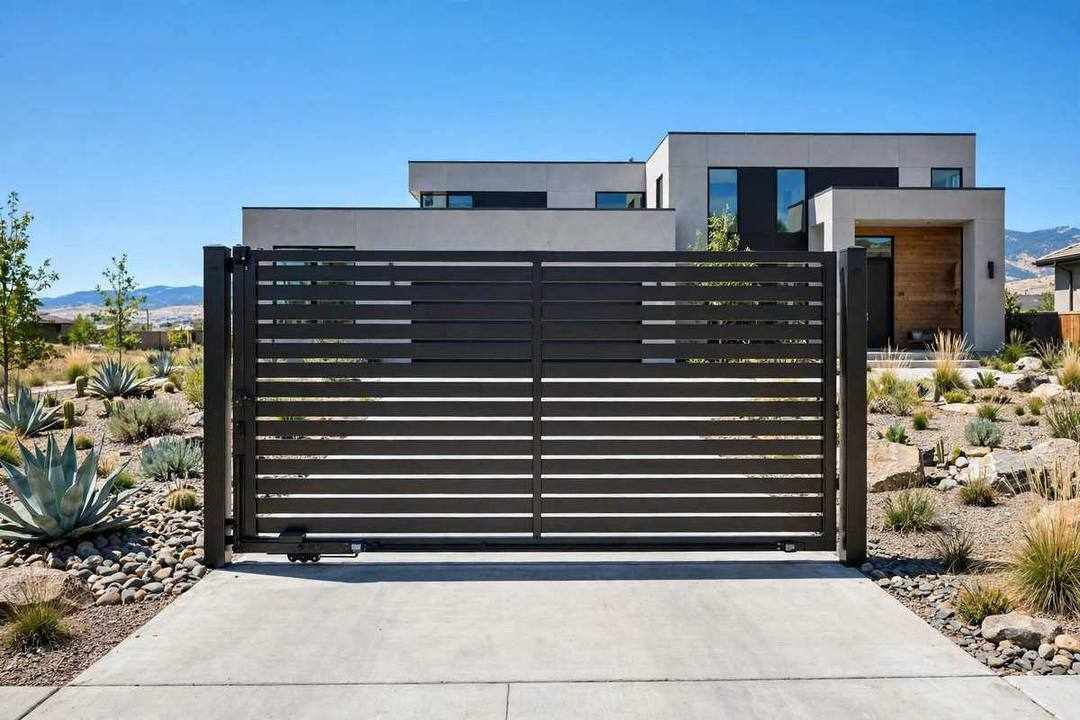
Modern automatic sliding driveway gate, contemporary Denver home

Why Denver homeowners choose an automatic gate opener

An opener is convenience with a safety picture attached. Here is what you actually get when we install yours — and what we will not skip.

  • Open from the car, in any weather

    A swing or slide opener opens the driveway gate from the car, with remotes and a keypad. No getting out in the rain, the snow, or the dark.

  • Gate first, opener second

    The gate has to swing or slide freely by hand before any motor goes on. An opener fitted to a dragging gate will strain the motor and fail early — so the gate is fixed or rebuilt first.

  • Safety sensors on every install

    Safety sensors watch the gate's path, and the opener reverses if it meets an obstruction. A moving gate without working sensors is a hazard, and we do not install one that way.

  • What an automatic gate costs in the Denver market

    Third-party market guides published in October and November 2026 put a walk gate at $328 to $633 and a double drive gate at $1,330 to $3,100 as add-ons to a fence job. Opener pricing itself is not in the published Denver market guides. Sources: NumeralQ, Oct 2026. Those are market ranges, not Payless Fence Company prices. Call (720) 697-2456 with your fence length and material and we will talk through a quote for your yard.

Denver fence rules to know before you build

Denver Fence Rules to Know

  • Gates and openers follow the fence rules — An automatic gate follows the same Denver rules as the fence around it: 4 feet in front of the primary street-facing facade, 6 feet behind it, and a zoning permit over 4 feet. Electrical work on an opener needs the relevant trade licence where the law requires it.
  • Zoning permit over 4 feet — Denver requires a zoning permit for any fence over 4 feet tall, and an opener follows the fence it sits in; over-height requests go through the Zoning Code's over-height process.
  • Colorado 811 before digging — We contact Colorado 811 for utility locates before any post hole is dug; never dig blind in a Denver yard — and the opener's electrical work is handled by the relevant trade where the law requires it.
  • HOA first, city second — In HOA neighborhoods, the association approves the fence before the city permit is filed; neither approval substitutes for the other — and an opener follows the same order.

Rated on Google

Google ★★★★★4.9 out of 5

Rated 4.9 out of 5 from 27 Google reviews. Read the reviews on our Google Business Profile, or call (720) 697-2456 to talk about your fence.

Local experience with automatic gate openers in Denver

Automatic openers in Denver have to survive freeze-thaw ground, snow at the gate line, and sloped drives — and the safety picture has to be right. We install swing and slide openers on gates that are built to take them, with safety sensors on every install, and we tell you plainly when the gate has to be rebuilt before the opener goes on.

  • Gate checked for an opener before any motor is ordered
  • Swing or slide chosen for the lot and the slope
  • Safety sensors aligned and tested on every install
  • Remotes, keypad, and access set up and walked through
  • Old opener, motor, and scrap hauled away
Call (720) 697-2456
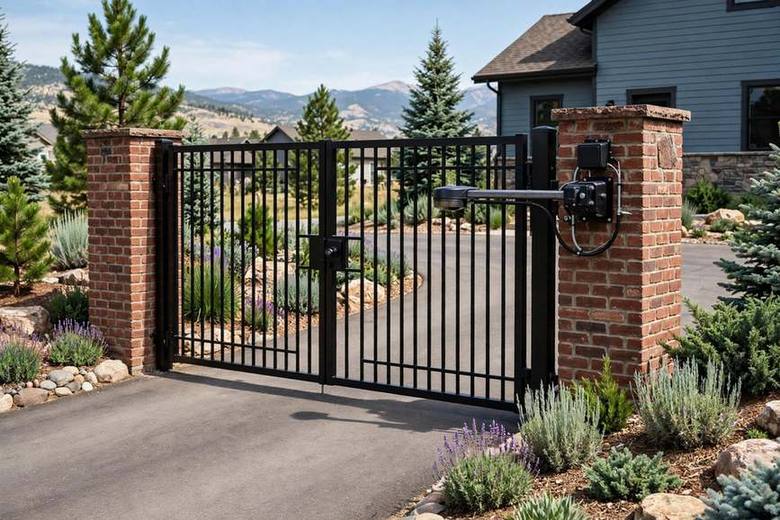
Automatic swing driveway gate half open with keypad entry post

Rated 4.9 out of 5 on Google

Payless Fence Company is rated 4.9 out of 5 from 27 Google reviews. Individual review text stays on Google; the aggregate is what we publish here. Call (720) 697-2456 to talk about your gate opener.

★★★★★

4.9 out of 5

Based on 27 Google reviews for Payless Fence Company. We do not publish customer quotes on this page; read the reviews on Google, then call us to talk about your fence.

Call (720) 697-2456

Frequently asked questions about automatic gate opener installation in Denver

Real answers to the questions we hear most often on gate opener installation jobs, from local homeowners and property managers.

How much does an automatic gate opener cost in Denver?
Third-party market guides published in October and November 2026 put a walk gate at $328 to $633 and a double drive gate at $1,330 to $3,100 as add-ons to a fence job. Opener pricing itself is not in the published Denver market guides. Sources: NumeralQ, Oct 2026. Those are market ranges, not Payless Fence Company prices. Call (720) 697-2456 with your fence length and material and we will talk through a quote for your yard.
Swing or slide — which opener is better for my driveway?
A swing opener is simpler and needs the gate's full arc clear. A slide opener needs a straight run beside the drive for the gate to slide into, and it handles a sloped drive better, because a swing gate fights gravity on a slope. We measure the drive and the clearances and talk through which fits your lot, rather than forcing one type onto every drive.
How long does automatic gate opener installation take?
A swing opener on a gate that already swings freely is usually a single visit once the motor and controls are on site. A slide opener, a gate that has to be rebuilt first, or a drive that needs power run to the gate takes longer. Call (720) 697-2456 and we will talk through timing for your gate.
Do I need a permit for a automatic gate in Denver?
A zoning permit is required in Denver for any fence over 4 feet tall, and a permit at any height on a landmark property, in a historic district, or along a designated parkway. A fence 4 feet and under generally needs no permit, and a like-for-like replacement of a permitted fence is generally exempt when nothing changes in location, footprint, or height. An opener follows the fence and gate it sits in — over 4 feet, it needs the same permit. Check the rules for your address before you build — historic-district and parkway rules are block-specific — and call (720) 697-2456 and we can walk through what your lot needs.

Call Payless Fence Company about an automatic gate opener in Denver

Call Payless Fence Company at (720) 697-2456 to talk about an automatic gate opener for your driveway. We will go over the gate, the drive, and the safety picture, and set a time to measure.

Call Now Call (720) 697-2456

Talk to our fence crew

Call (720) 697-2456 to talk about an automatic gate opener. We answer Monday through Sunday, 7:00 AM to 8:00 PM. Have the gate type, the drive slope, and your neighborhood ready, and we can talk through the next steps on the call.

Payless Fence Company


  • Address

    Payless Fence Company LLC, Denver, CO 80201, US

  • Hours

    Mon–Sun 7:00 AM–8:00 PM

Call (720) 697-2456 Call Now
Call Call