
Denver Fence Permit Rules: What You Need to Know
Denver fence permit rules: height limits, when a zoning permit is required, historic-district review, and HOA approval order.
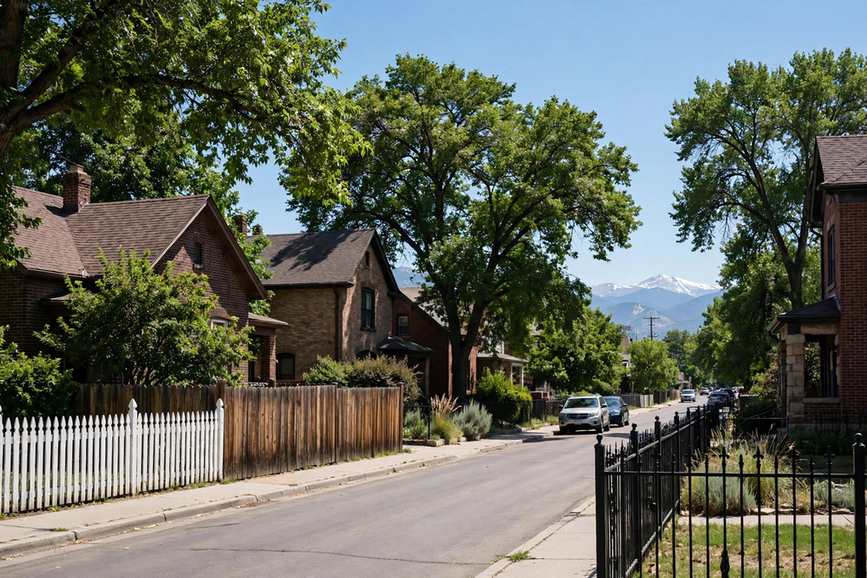
Denver fence permit rules: height limits, when a zoning permit is required, historic-district review, and HOA approval order.
The height rules
Denver caps residential fences at 4 ft in front of the primary street-facing facade and 6 ft behind it. Industrial lots differ: 7 ft within the setback and 10 ft outside it. Taller fences are possible through the Denver Zoning Code over-height process (§10.5.5); staff approval is capped at 2 ft above the minimum required, and anything more needs a Board of Adjustment variance.
Two more limits apply everywhere: corner lots have sight-triangle rules, and fences must sit at least 6 inches back from the public sidewalk, never in the public right-of-way.
When a permit is required
A zoning permit is required for any fence over 4 ft, and for all walls including retaining walls over 12 inches. A building permit is required for post-hole fences over 8 ft, and for all other fence types over 4 ft. Fences under 4 ft usually need no permit — unless the property is a landmark, in a historic district, or on a designated parkway, where a permit is required at any height.
The exception that matters most for homeowners: regular maintenance, normal repairs, or like-for-like replacement of a previously permitted fence, with no change in location, footprint, or height, usually needs no new permit. Retaining walls are different — any modification needs a zoning permit, even like-for-like.
Historic districts and HOAs
On an individual landmark or in a historic district, a Certificate of Appropriateness from Landmark Preservation is required before a zoning permit issues, at any height. Front fences in districts are generally limited to 48 inches and more than 50% open, and vinyl, PVC, new chain link, and opaque front fencing are discouraged. District boundaries are block-specific, so check per address.
HOA approval and the city permit are two separate approvals, and neither substitutes for the other. Where an HOA applies, its design review comes first, then the city permit. The city maximum is a ceiling; an HOA can require shorter, or a named color or material.